
Gear for good
I remember it clearly. Day one, the first of our seven days of hiking to the summit of Mount Kilimanjaro. Our daypacks were filled with water, snacks, and other necessities, our minds filled with anticipation of what the next seven days would bring. And then the first porter walked past us up the steep trail…carrying a basket of supplies on his head, a backpack packed to the brim, and bread strapped to his back, all while wearing a pair of old running shoes. Yes, regular running shoes! Here we were, decked out head to toe in hiking gear, while the person helping carry our supplies wore shoes meant for road running, not the trail. Every astonished emoji was running through my mind as I watched him easily walk past.
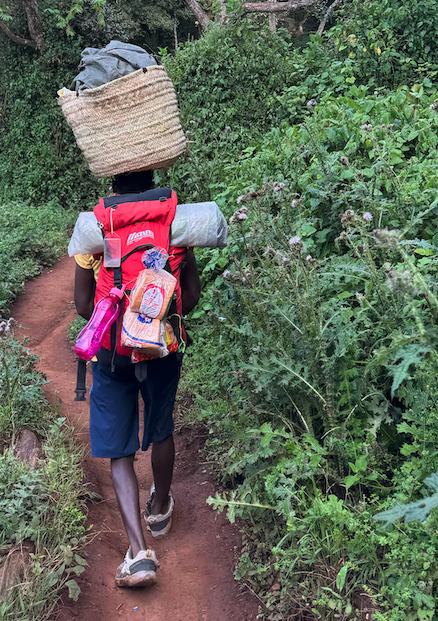
Porter hiking on Mount Kilimanjaro - Lemosho route
While Mount Kilimanjaro isn't a technical climb, it's still a hike with real terrain to cover — so seeing this porter in running shoes took me by surprise. It made me wonder where the guides' and porters' gear comes from, and how they get it. Simply put, good technical gear can be expensive and often hard to come by, so most guides and porters depend on gear that's left behind or given to them. And as we saw, many make do with what they can find. Unfortunately, not all companies provide the daily wages recommended by KPAP, which makes gear even harder to acquire.
As part of our goal to support the individuals working on Mount Kilimanjaro, Project Rudisha started doing a gear drive in 2024 alongside our educational grants. We asked our friends and families to clean out their closets to see if they had any gently used gear they'd be willing to part with. It was amazing to receive so many gently used jackets, hiking pants, base layers, gloves, and hiking boots that we were then able to take back to Tanzania to distribute. We continue to do this each year, and will also be able to provide KPAP with additional gear to add to the rental equipment they provide to porters for free.
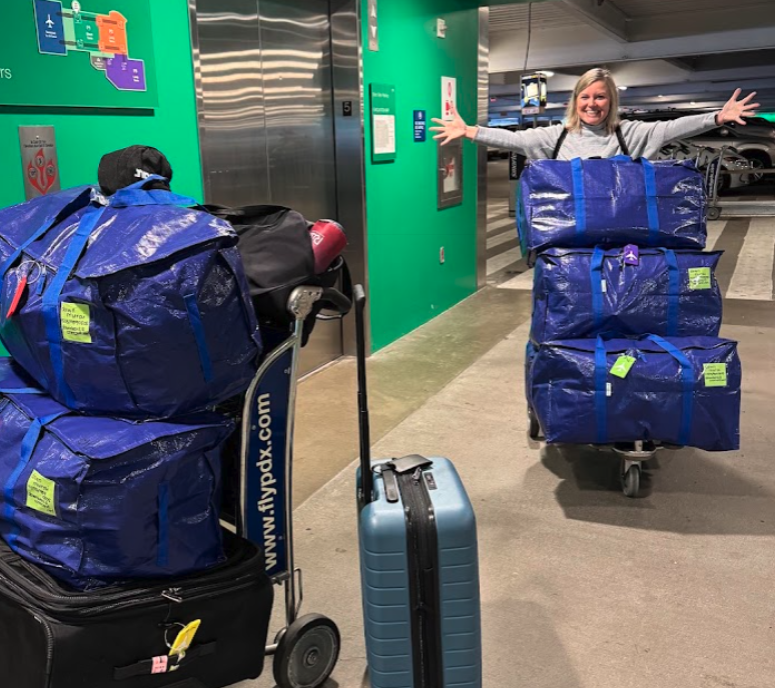
Gear heading to Tanzania for guides and porters
This year, we extended our gear drive to include a gear trade-in component. With everything we collected this year, we went through it to determine which items would be good to trade in using REI's trade-in program. Through this program, we can trade in gently used gear and receive REI credit in return. That credit let the team purchase new and lightly used hiking boots — filling in sizes we didn't get through the drive — which we took with us to Tanzania. It has been gratifying to see this program slowly grow, and we're looking forward to doing additional outreach next year.
Providing this vital equipment to these hardworking individuals has made a real difference. Thank you to our friends and families who have so generously donated their gear. We're grateful for the help George and Nick have provided to distribute the gear. And we can't thank Kelvin and the team at KPAP enough for the work they do advocating for fair wages and expanding access to quality gear through their rental program in Moshi.
Please consider making a donation to Project Rudisha to help bring more gear and educational grants to guides and porters. Or contact us, if you are interested in donating gear that we can then bring to Tanzania - we are able to take new or lightly used backpacks, hiking boots, down or fleece jackets, hiking pants, hiking shirts (long and short sleeve).